
Skip to content
Casa Plac

From 14 to 51 minutes

Two thousand years of history,
less than an hour from here.

A Roman arch from 27 BC, a bridge from AD 21 you can still walk across, over one hundred and fifty caves dug beneath a village, a 15th-century library that has remained unchanged. These aren't metaphors: these are things you can touch.

14 minutes · 11.5 km

Cesenatico

The Porto Canale is the reason to go: a straight canal through the town, with historic boats with colorful sails moored like in an open-air museum — because they are: it's the floating section of the Museo della Marineria.

The port's layout is linked to the survey that Leonardo da Vinci made of these coasts in 1502, when he was in the service of Cesare Borgia.

Also worth seeing: the fish market, the monument to Marco Pantani (Cesenatico was his hometown), and at Christmas the Presepe della Marineria, set up on the boats in the harbor.

Plan for half a day, ideally towards evening. The weekly market is on Friday.
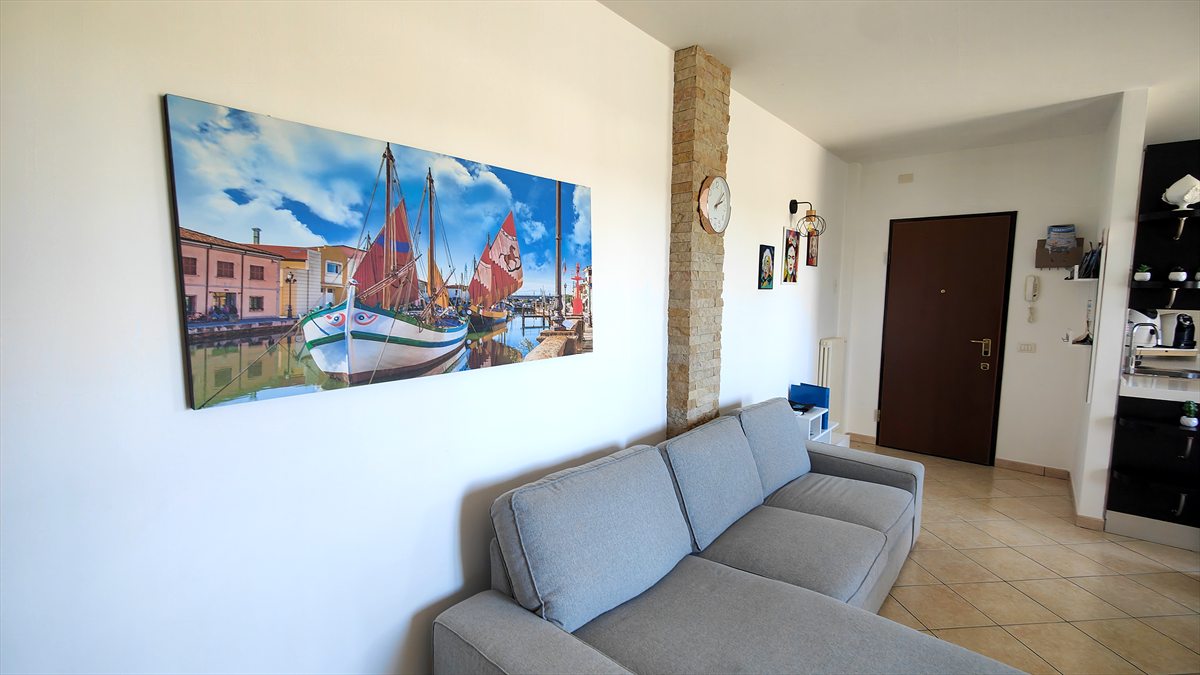
The painting of Cesenatico's Porto Canale hanging in the living room at Casa Plac

The Porto Canale, in the painting hung above the sofa at home.
23 minutes · 25.3 km

Rimini

It's not just the beach. It's one of the few Italian cities where a Roman arch, a Roman bridge, an amphitheater, and a Roman house sit within a few blocks of each other.

27 BC

The Arch of Augustus

Erected by order of the Roman Senate, 17.5 meters tall. The city lists it as the oldest surviving arch in northern Italy. The battlements on top are a medieval addition: the original attic had collapsed.

AD 14–21

The Bridge of Tiberius

Begun by Augustus, finished by Tiberius. Five arches in Istrian stone, resting on wooden piles. It has withstood earthquakes, floods, and the demolition attempts of 1944. Today you walk across it: it's closed to cars.

From 1447

The Tempio Malatestiano

Remodeled to a design by Leon Battista Alberti for Sigismondo Pandolfo Malatesta. Inside, Giotto's Crucifix and the 1451 fresco by Piero della Francesca. The planned dome was never built: Sigismondo lost his wars.

Discovered in 1989

The Domus del Chirurgo

A 2nd-century Roman house that surfaced during works in Piazza Ferrari, with about 150 surgical instruments — one of the richest sets to have come down from antiquity. Among them the «Diocles' spoon», used to extract arrowheads, a unique example in the world.

Since 2021

The Fellini Museum

Across three venues: Castel Sismondo, Palazzo del Fulgor, and Piazza Malatesta. The Ministry of Culture has included it among the major national cultural projects. In the square there's the «Bosco dei nomi» conceived by Tonino Guerra.

Since 1980

Borgo San Giuliano

Across the bridge, the fishermen's quarter: low houses painted with murals born from the Festa de' Borg, and ceramic plaques with the nicknames of longtime residents. In 1994, the edition after Fellini's death, the festival was dedicated entirely to him.

You can cover the historic center on foot in 3-4 hours without entering the museums. Market on Wednesday and Saturday morning.

17 minutes · 12.8 km

Santarcangelo di Romagna

Beneath the village there's a second city: over 150 caves, tunnels, and galleries dug into the hill. They're called «tufa caves» but tufa has nothing to do with it: they're carved into sandstone and clay. They were used to store wine, then became air-raid shelters; the origin of the oldest remains unknown.

Visits are only with a guide and by reservation, and down there it's a constant 13 degrees: you'll need a sweatshirt even in August. The tour lasts from 50 minutes to an hour and a quarter.

On the surface: the Stamperia Marchi, a workshop documented since 1633, where an ancient wooden mangle — the only one in the world still working, mentioned in Diderot's Encyclopédie — still presses hand-printed fabrics with rust dye. And the Ganganelli Arch, erected for the townsman who became Pope Clement XIV.

In November there's the Fiera di San Martino, the «fiera dei becchi»: a trophy of horns is hung under the arch, and tradition has it they move as anyone with an unfaithful partner passes beneath.

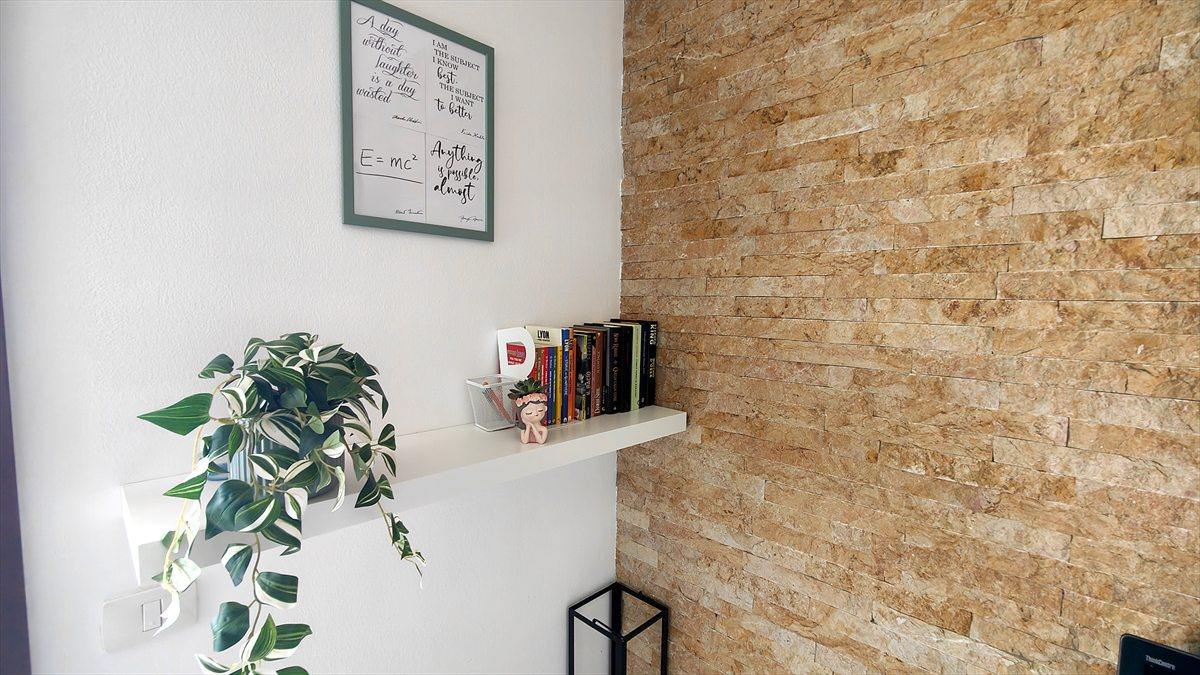
Detail of the shelf with books in the living room at Casa Plac

And then

Other places worth a day out, in order of minutes.

18 minutes · 11.1 km

Longiano

Hilltop village with the Malatesta castle. It's the quick getaway when you want a change of scene without driving far: from the hill you can see the whole plain all the way to the sea.

23 minutes · 15.9 km

Cesena

The Biblioteca Malatestiana is the reason to go: a 15th-century humanist library that has come down to us intact, with its original desks, codices, and chains. It is inscribed in UNESCO's «Memory of the World» register. Around it, Piazza del Popolo with the Masini Fountain and the fortress.

24 minutes · 19.1 km

Cervia

A city built from scratch in 1698 by order of the pope, because the old Cervia, in the middle of the salt pans, was unhealthy. The Quadrilatero is still there: a rectangle 270 by 170 meters of salt workers' houses.

Next door, the salina: 827 hectares, a nature reserve and Ramsar site, with pink flamingos. It can only be visited on guided excursions, on foot, by electric boat, or by bike.

42 minutes · 41.7 km

San Marino

It's another country, with its own customs and tax system: there's no VAT but a «single-phase» tax on imports. The historic center on Monte Titano is UNESCO-listed, with the three towers and the walkways.

For shopping there's the outlet at Falciano, on the border. A full day, and it's best to take the road from Rimini Sud.

47 minutes · 37.2 km

San Leo

The fortress atop a rocky spur, where Count Cagliostro died in prison. The road is all bends: allow time, and consider the stomachs of those who get carsick.

51 minutes · 50.4 km

Ravenna

The Byzantine mosaics, a UNESCO site, and Dante's tomb. It's the farthest and the most different from everything else: a whole day, and it's worth setting off early.

A base at the center
of it all

This is exactly the advantage of staying inland: none of these destinations is «on the other side».